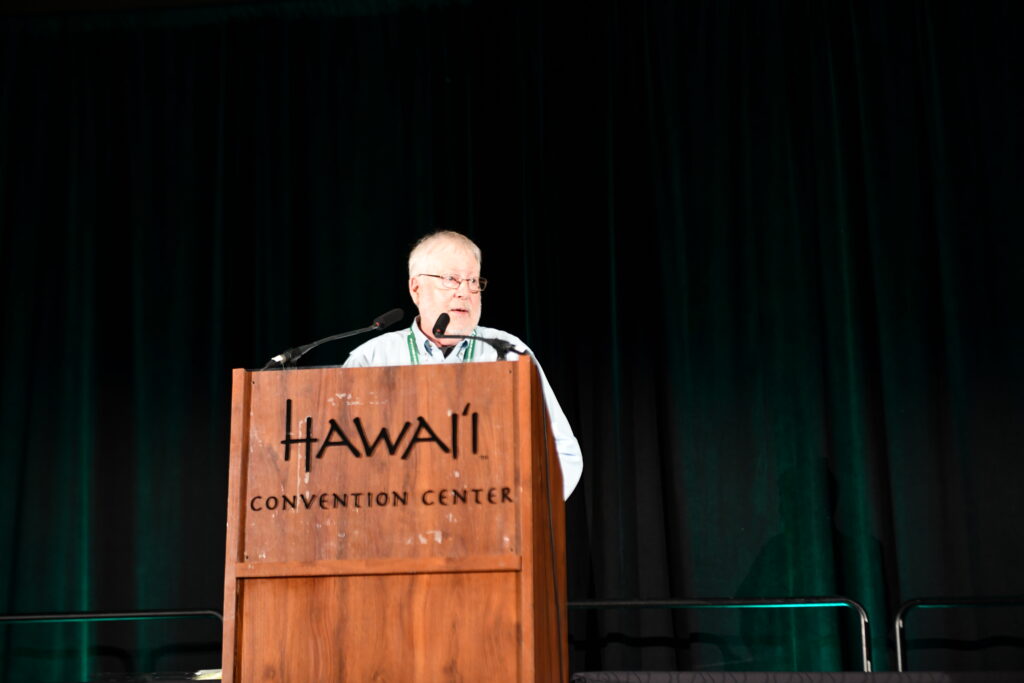
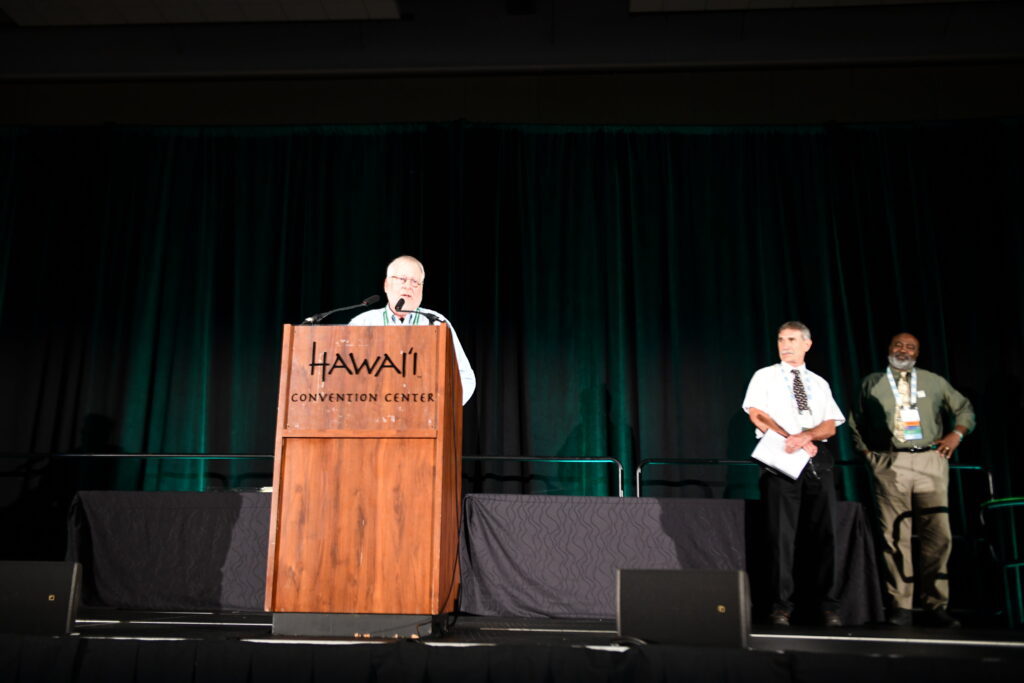
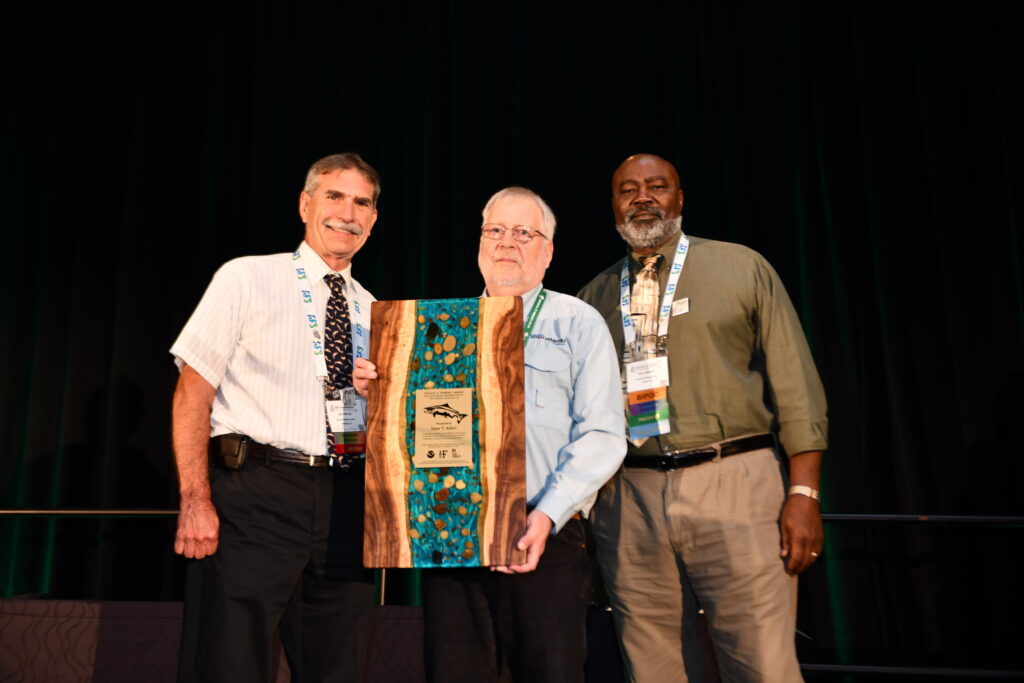
Stan Allen of the Pacific States Marine Fisheries Commission was honored with the 2024 Stanley A. Moberly Fish Habitat Conservation Award from the American Fisheries Society. Congratulations, Stan, and thank you for your amazing work!
After completing his education at Boise State University, Stan has had a long and
distinguished career in fisheries starting with Idaho Department of Fish and Game in 1980
as a Biological Aid and working up to the Information Resource Data Manager, where he
was responsible for building a consistent and verifiable river database. This work resulted in the protection of over 40,000 miles of streams in the Columbia River Basin from
additional hydropower development. In the mid-1990s, Allen then moved to the Pacific
States Marine Fisheries Commission where he has been a Senior Program Manager for 31+ years. His work there has included the development of the CalFish system to support
habitat efforts for anadromous fish and development of StreamNet, a cooperative data
effort that has been the foundation for the support of fish conservation in the Pacific
Northwest. He has also managed countless fisheries projects, currently including 80
projects with 150-175 employees, such as the reintroduction of salmonids in California
Central Valley tributaries, the Klamath River watershed rehabilitation, and Pacific Coast, in
particular in California, fish passage barrier identification, removal, and mitigation.
When he was not handling these duties, he is heavily involved with the National Fish
Habitat Partnership, starting in 2005 as a key member of the NFHP Board’s Science and
Data Committee. He then became a long-time Board member and now is the Vice Chair of the Board, ensuring NFHP continues its incredible fish habitat conservation work.
“Stan Allen is one of those remarkable people who make a quiet difference every day to
our fisheries and fish habitat,” said First Vice President Whelan. “A truly remarkable story
of a career’s work which is not yet complete—it is due to professionals like Stan that our
fisheries do, can, and will perform to their capabilities.”