
U.S. Fish and Wildlife Service and Partners Announce More than $23.4 Million for Fish Habitat Conservation in 2025
For Immediate Release: May 29, 2025 Contact: Ryan Roberts (rroberts@fishwildlife.org) U.S. Fish and Wildlife Service and Partners Announce More than $23.4 Million for Fish Habitat Conservation in 2025 (Washington, DC) – Through […]
Juvenile fishes show fidelity to intertidal creeks
Salt marshes are coastal wetlands found along the sheltered shorelines of estuaries in temperate regions around the world (Figure 1). These marshes are dominated by salt tolerant grasses that withstand […]
Potential competition between black crappie and invasive white perch in freshwater reservoirs
Non-native fish have invaded and altered freshwater ecosystems around the world. Many of these species are popular gamefish that have been purposefully introduced beyond their native range to enhance local […]
The early life and struggles of alewives in a New Jersey river system
Alewives (Alosa pseudoharengus; Figure 1) are small, silvery forage fish found along the East Coast from Newfoundland to the Carolinas. They are commonly referred to as river herring along with […]
Prey selection of two bluefish cohorts
Bluefish (Pomatomus saltatrix; Figure 1) is a highly predatory saltwater species found in most coastal areas around the world. Bluefish are opportunistic and voracious feeders that commonly prey on small […]
Walleye populations are declining in Wisconsin lakes

Walleye (Sander vitreus; Figure 1) are one of the most sought-after fish among recreational anglers in the Upper Midwest. Prized for their mild flavor and flaky texture, they are a […]
Movements of coastal brook trout after dam removals
Brook trout (Salvelinus fontinalis; Figure 1) are a species of char native to the eastern half of North America. Though commonly associated with headwater streams in the mountains, populations of […]
Habitat preferences and movements of non-native rainbow trout

In many coldwater rivers and streams around the world, nonnative trout have altered the aquatic ecosystem. In the late 1800s, widespread trout stocking became commonplace and various trout species were […]
eDNA: An exciting new tool for fisheries research
Studying aquatic organisms is challenging. Unlike counting sheep in a pasture, counting fish in the water is much more difficult. The most effective method varies considerably among species. Fisheries scientists […]
Adding wood to streams benefits brook trout
Trout fishing is a popular pastime around the world. Most trout species are known to put up a good fight on the line and are valued for their table fare. […]
Spawning sea lampreys influence macroinvertebrate communities in streams

Sea lampreys (Petromyzon marinus) are a jawless species of fish native to the northern Atlantic Ocean and Mediterranean Sea. They have a complex life cycle that begins and ends in […]
Angling for nesting largemouth bass can have negative effects on spawning success

Largemouth bass (Micropterus salmoides; Figure 1) are a highly prized freshwater gamefish in the sunfish family, Centrarchidae. They are native to east-central North America but have been introduced worldwide due […]
Oyster aquaculture provides habitat for fish and invertebrates

Eastern oysters (Crassostrea virginica) have traditionally been farmed on leased shellfish beds in estuaries. The most common oyster farming technique in Connecticut waters is called bottom culture. In bottom culture, […]
Bass dispersal after weigh-ins at fishing tournaments

Largemouth bass (Micropterus salmoides; Figure 1) and smallmouth bass (Micropterus dolomieu; Figure 2) are two of the most popular species of freshwater fish in North America. Both species are voracious […]
Alewife spawning strategies may differ between river systems

Alewives (Alosa pseudoharengus) are small, silvery forage fish in the family Clupeidae (Figure 1). Their native range spans the eastern seaboard of North America from South Carolina to Newfoundland. Historically, […]
The importance of otoliths in fisheries biology

One of the biggest difficulties in fisheries research and management is that it is challenging to directly observe fish over the entire course of their life cycle. It is much […]
Preventing ghost fishing through collaborative fisheries research
Marine debris is a major issue in coastal and marine ecosystems around the world. While large accumulations of floating debris, such as the Great Pacific Garbage Patch, are the most […]
Effects of dam removals on riverine fish assemblages
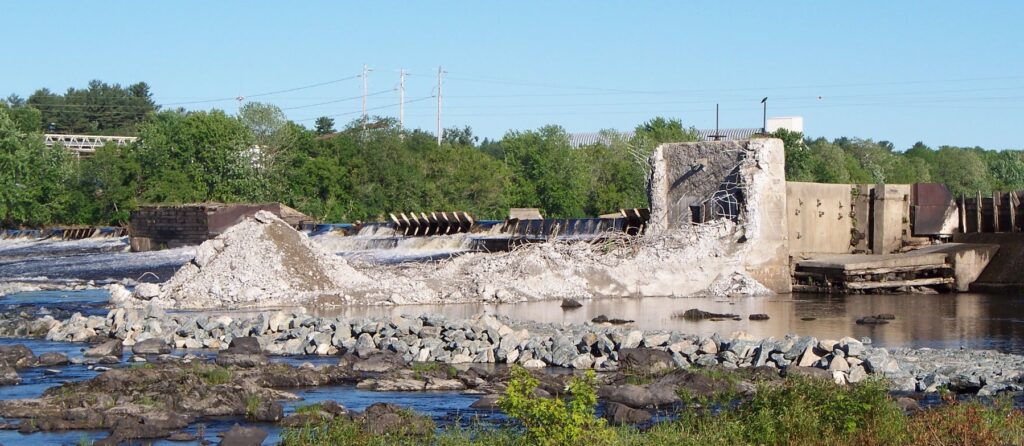
In many rivers throughout the world, dams have greatly altered the aquatic ecosystem. These structures block migratory routes for anadromous species that live in saltwater and migrate into freshwater to […]
Using oyster toadfish calls to monitor restored oyster reefs

Oyster reefs are dense colonies made up of thousands of individual oysters attached to hard substrate (Figure 1). Because of their complex structures, oyster reefs provide important habitat for a […]
Fish on artificial reefs forage on the reef and the surrounding sand bottom
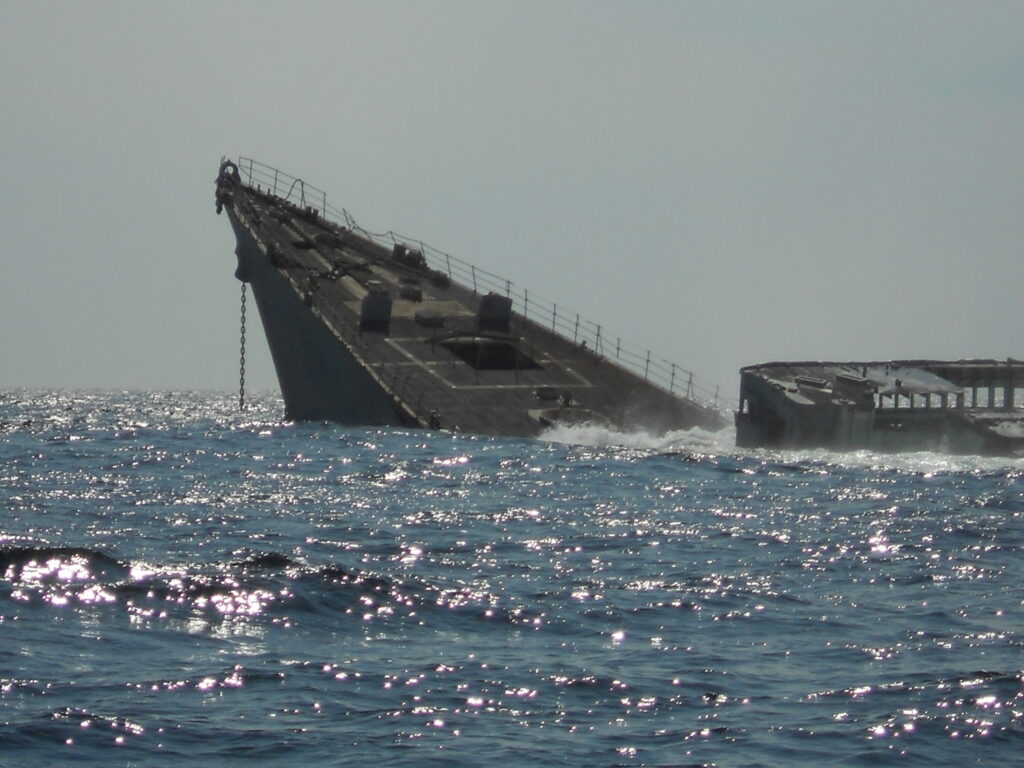
Artificial reefs are intentionally placed man-made structures that are constructed to provide habitat for fish and invertebrates. They are made of dense, durable materials such as scuttled ships and barges, […]

